
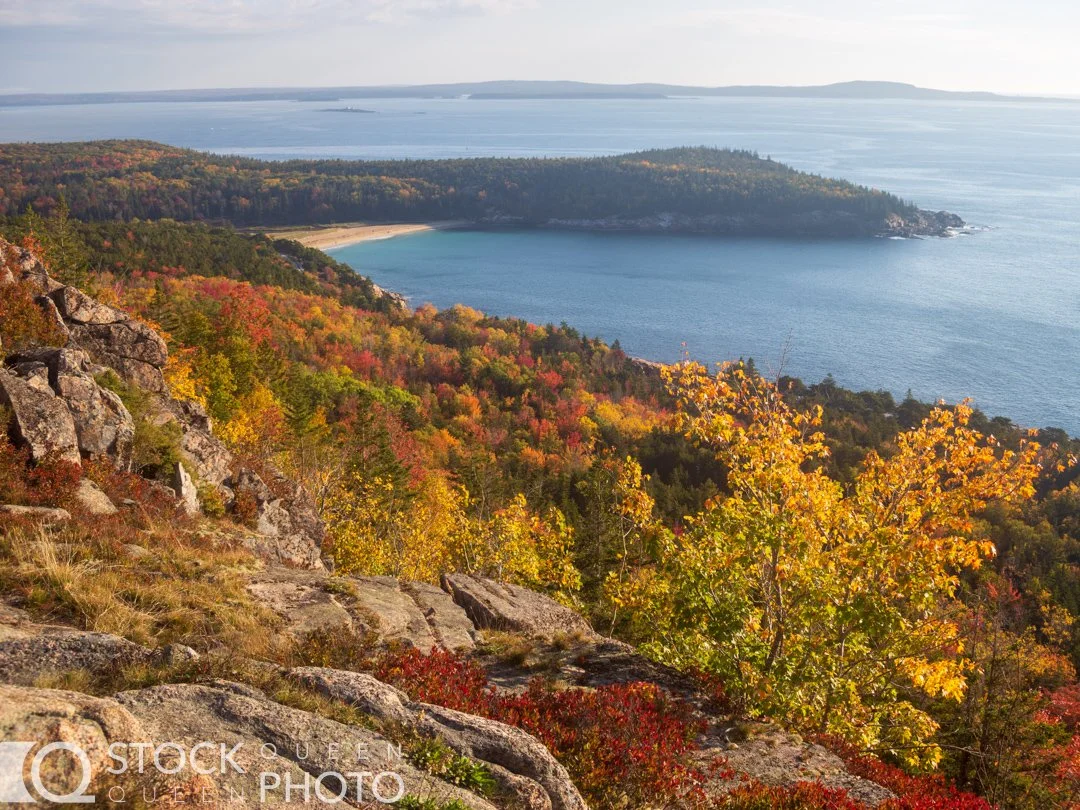
Autumn in Acadia National Park, Maine — real color, changing light and a moment that could only be photographed by being there. Photographed by Katie Dobies.
A photograph can be beautiful without telling us much about where it came from. But when an image is being used to represent a real destination, community, landscape or experience, where it came from matters.
As AI-generated imagery becomes increasingly realistic, it is easier than ever to create a convincing-looking mountain, coastline, city street or national park scene. The image may look plausible. The question is whether the place shown actually existed in front of a camera.
For publishers, designers, educators, nonprofits, travel businesses and other organizations communicating about real places, that distinction can be important.
Place-specific photography begins with being there.
A photographer has to travel to the location, experience the conditions and work with whatever the place provides. The weather may change. The tide may be different than expected. Fog can obscure a view. A familiar landscape can look completely different from one season to another.
Those variables aren't imperfections in photography. They're part of the record of a real place at a real moment.
A Location Is More Than a Keyword
Searching for an image of Maine, Arizona or a national park can make photography seem interchangeable. Find an attractive image, add it to the design and move on.
But places have identities.
The rocky shoreline of Maine doesn't look like every coastline. The Sonoran Desert isn't interchangeable with another desert landscape. Acadia National Park, Yellowstone, the Adirondacks and the streets of New Orleans each contain visual details that belong specifically to those places.
When imagery is used in travel stories, educational materials, editorial content or destination marketing, those details can matter.
A photograph can help communicate not simply the idea of a place, but the place itself.
Real Weather Is Part of the Story
Some of the most interesting photographs aren't made under perfect conditions.

Seagulls emerge through coastal fog, a quiet reminder that real places are shaped by weather, atmosphere and unexpected moments. Photographed by Katie Dobies.
Fog rolling across a coastline, snow covering a desert mountain, clouds gathering over a national park or blue hour settling over a harbor can reveal something about a location that a perfectly clear day cannot.
These atmospheric conditions also provide context.
They show that real places change.
A destination isn't experienced under one permanent blue sky. It has seasons, weather, changing light and unexpected moments. Photography preserves some of those variations.
For someone selecting imagery, that can create opportunities to choose a photograph that matches the actual story being told rather than simply choosing the prettiest generic representation of a destination.
Specificity Builds Trust
There are situations where an image is simply decorative. There are others where viewers reasonably assume that what they're seeing represents something real.
A photograph accompanying an article about Acadia National Park, for example, carries an implicit connection to Acadia. A photograph illustrating a Maine travel guide should actually depict Maine. An educational resource identifying a landscape, landmark or destination needs imagery that supports the information being presented.
As synthetic imagery becomes more common, knowing the origin of an image becomes increasingly valuable.
Where was it photographed? Is the location identified? Was it made by a photographer? Does it depict what the caption or article says it depicts?
Those are no longer questions reserved for photo editors. They're becoming useful questions for anyone selecting imagery.
Photography Can Preserve Small Details
Place-specific photography isn't limited to famous landmarks.
Sometimes the details tell the richer story: lobster buoys along a Maine waterfront, desert vegetation in Arizona, an old staircase inside a historic building, a trail disappearing into fog, working boats in a harbor or the textures of a landscape.
These photographs can provide visual context that broader destination images cannot.
They can also help designers and publishers move beyond the same handful of iconic views that appear repeatedly in search results.
Knowing Where a Photograph Came From Matters
Stock photography has always involved searching for the right image. Increasingly, that search may also involve understanding the image's origin.
Was somebody actually standing there?
For the photography available through Stock Photo Queen, the answer is yes.
The library is built from real, human-made photography created through years of travel, observation and being present in the places photographed. Locations and subjects are identified whenever that information is relevant so image buyers have more context about what they're licensing.
That doesn't mean every project requires a highly specific location. Sometimes a quiet forest, an open road or a dramatic sky is exactly what a design needs.
But when the place matters, the photograph should matter too.
Because photography doesn't begin with a prompt.
It begins with being there.